Role
Product Designer
Timeline
6 weeks
Team
3 person team
Skills
Product Design
.
Brand strategy
.
Tools
Figma
PROBLEM
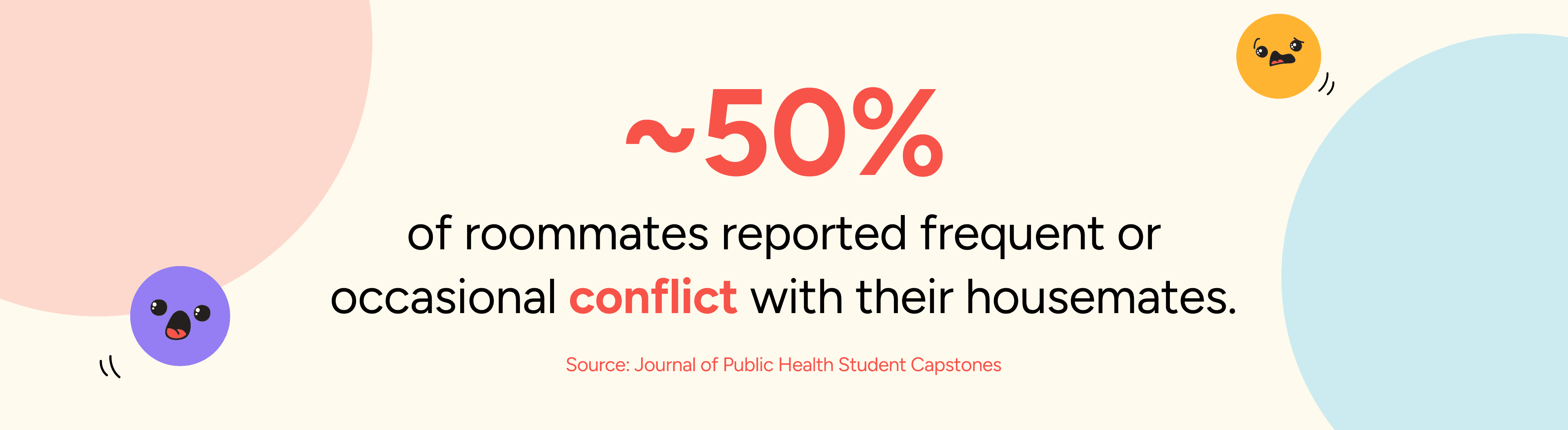
Shared living relies on informal systems that break down
Roommates manage chores, communication, and expenses through texts or verbal agreements.
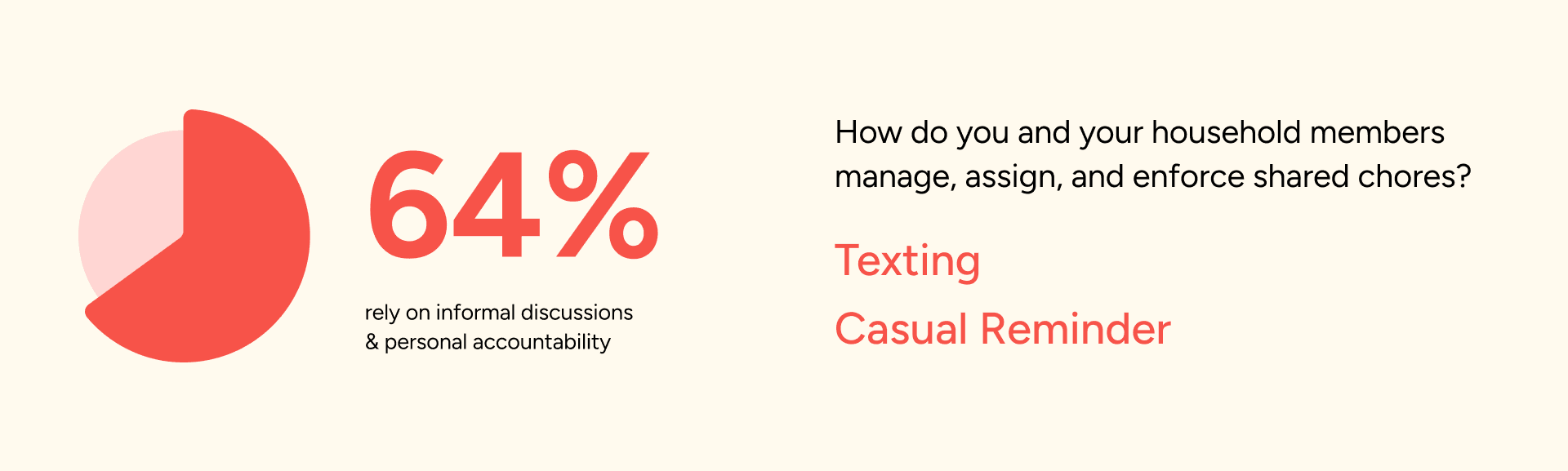
64% rely on informal discussions
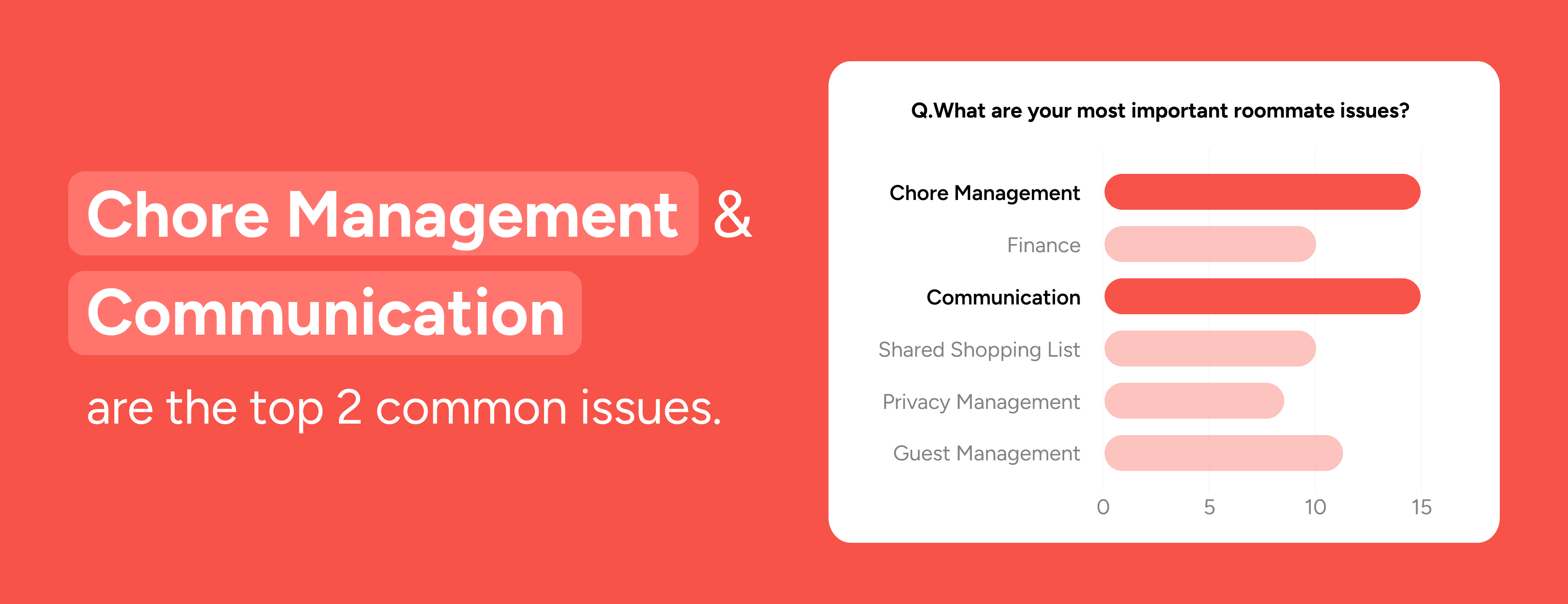
Chores and communication are the biggest pain points
This leads to miscommunication, uneven workloads, and avoided conflict.
OPPORTUNITY
Turning informal coordination into a structured system
Roommate dynamics don’t need more communication—they need better organization.
Create shared accountability
Make responsibilities visible and trackable
Clear communication
Replace scattered conversations with structured interactions
Simplify coordination
Bring chores, finances, and communication into one system
SOLUTION
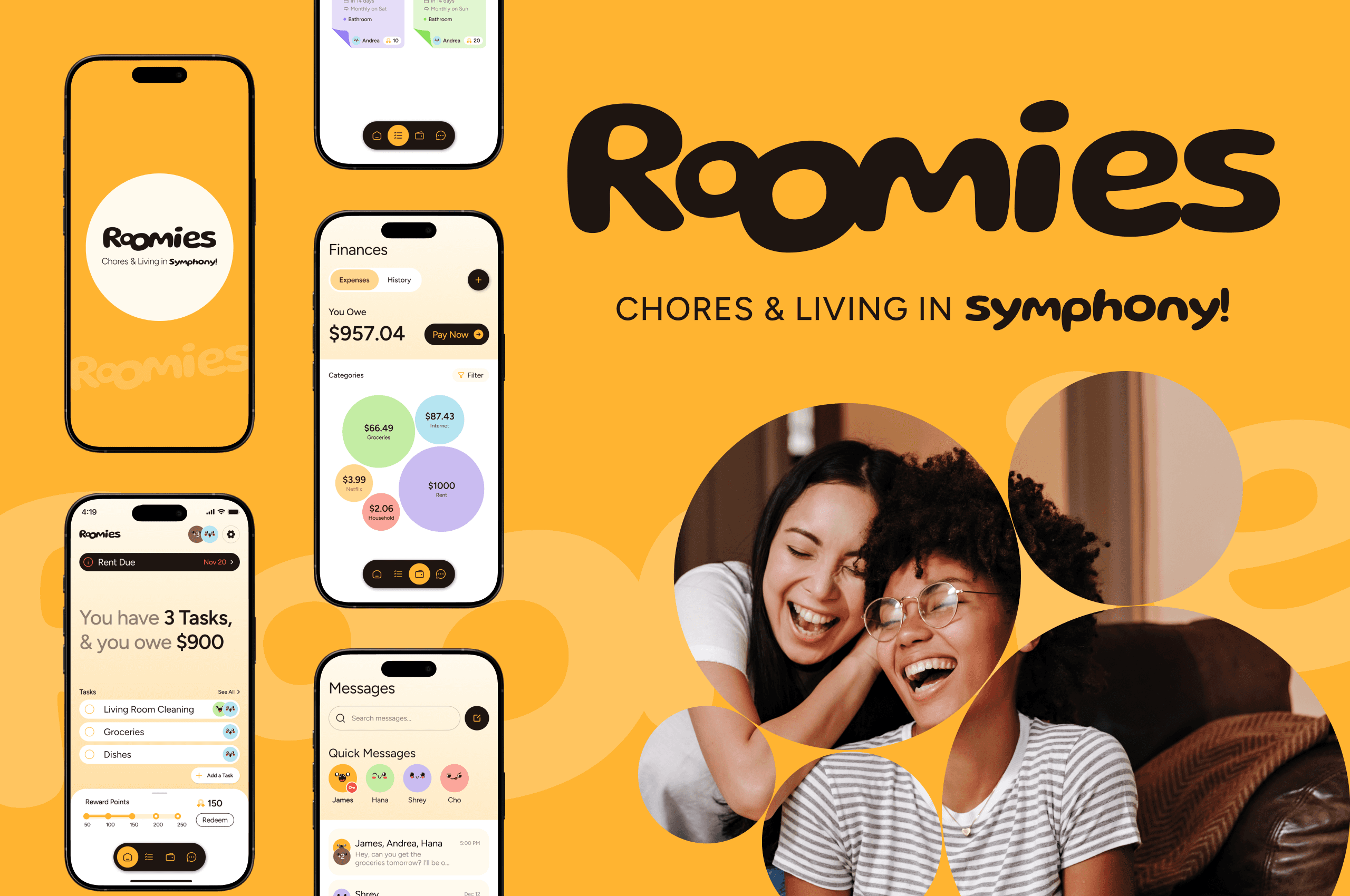
A unified platform for managing chores, communication, and expenses
Roomies centralizes everyday tasks into one app:
Chore and task management
Group messaging
Expense tracking
Shared dashboard
Reward system

DESIGN APPROACH
Making responsibilities visible and easy to manage
Centralize shared living tasks
Reduce friction in coordination
Encourage accountability through visibility
Keep interactions simple and predictable
RESEARCH
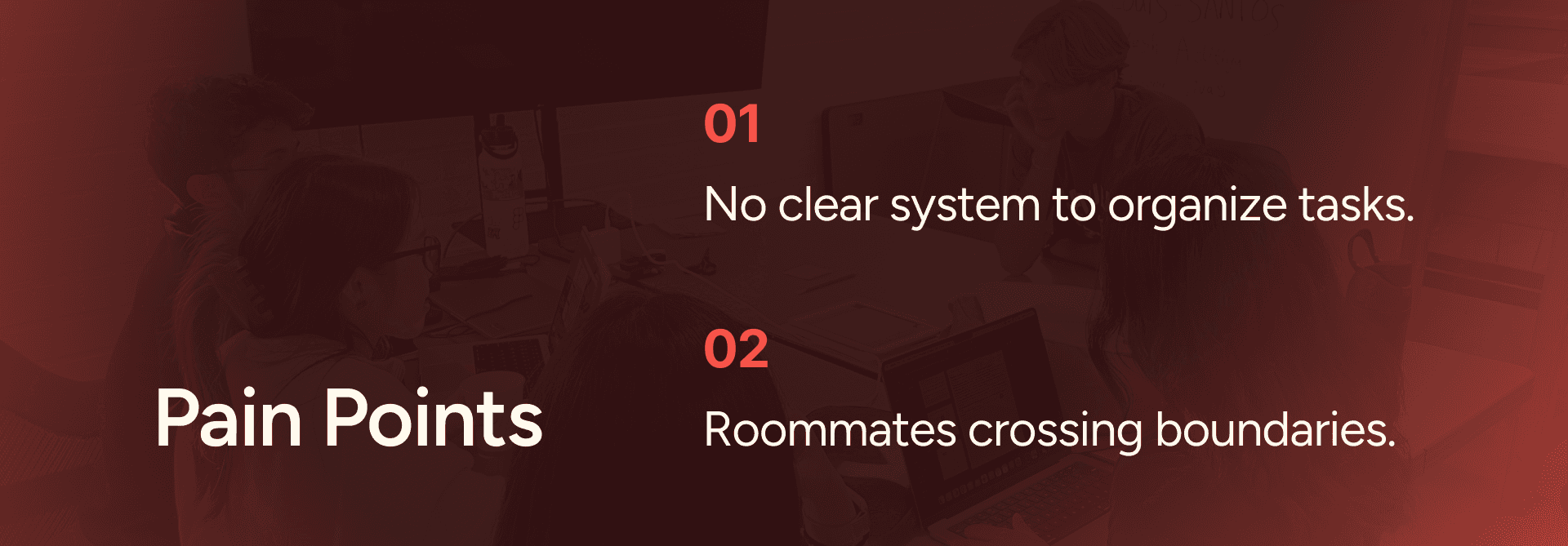
Users don’t lack tools—they lack a system
Existing apps lack clarity and disrupt workflows
Users rely on multiple tools (texts, Venmo, notes)
Tasks are often unclear or forgotten

PROCESS
From fragmented workflows to a unified system
Identified key pain points through research
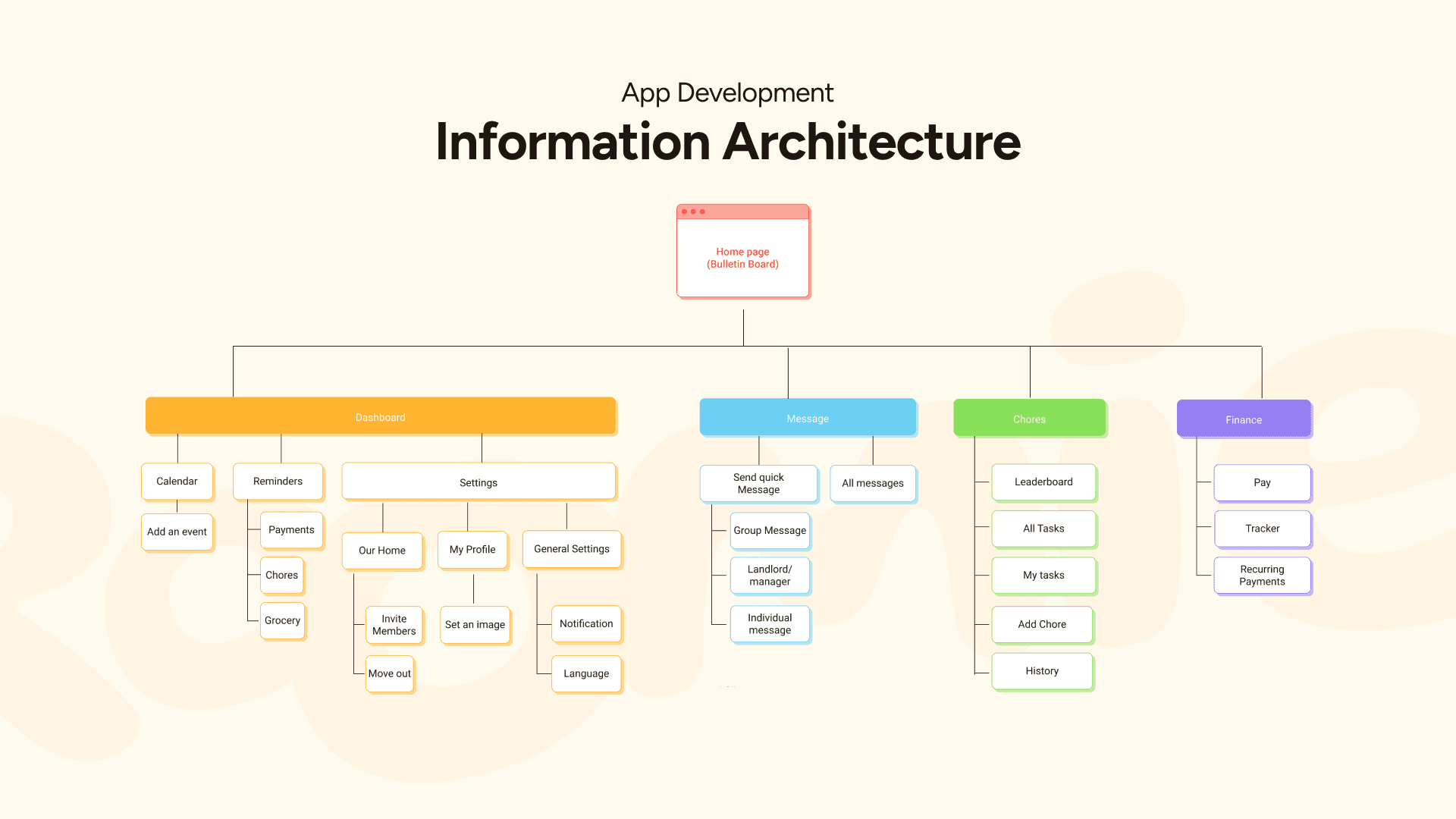
Defined core features and system structure
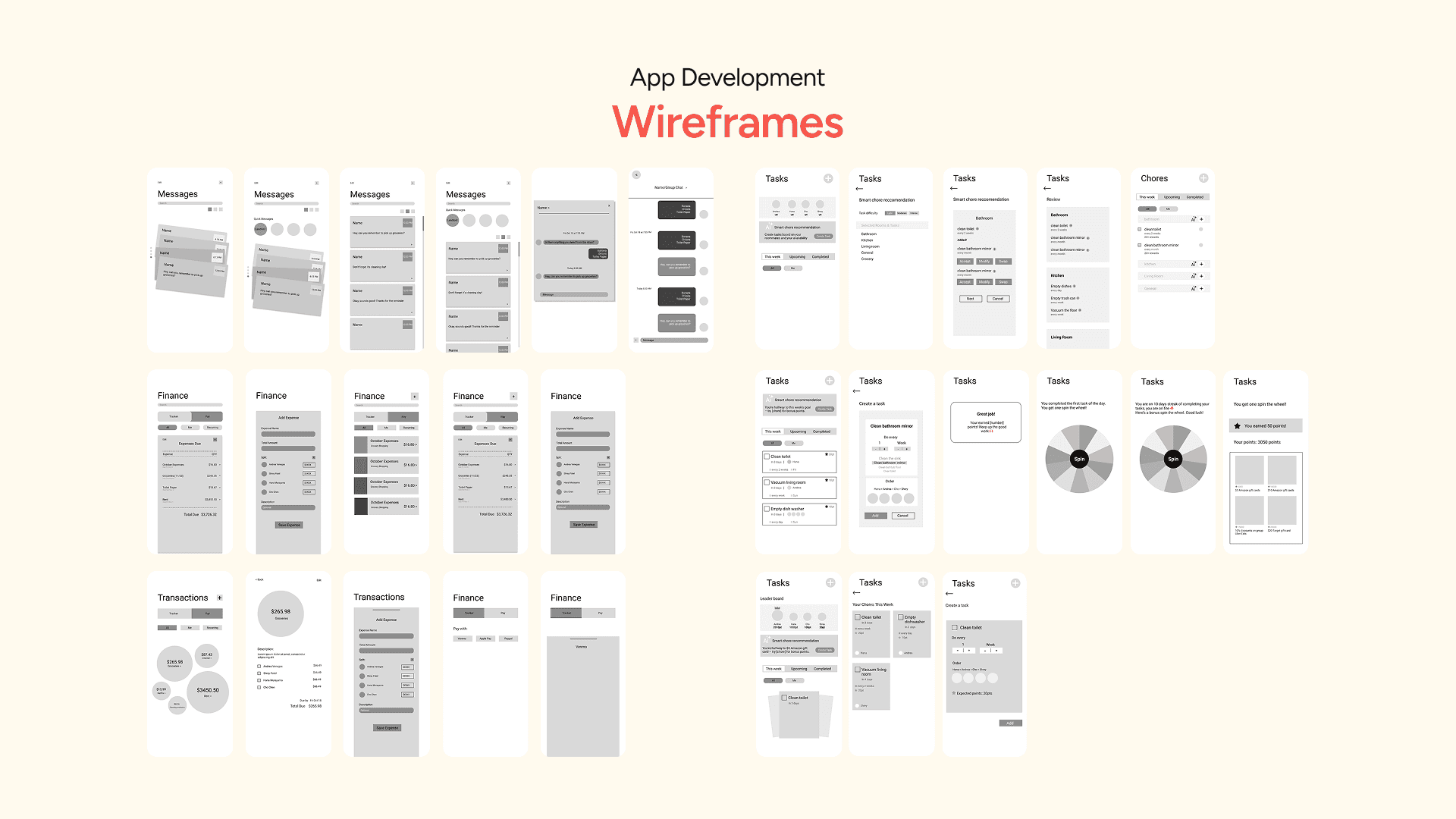
Designed and iterated on main flows

HIGH-FIDELITY MOCKUPS
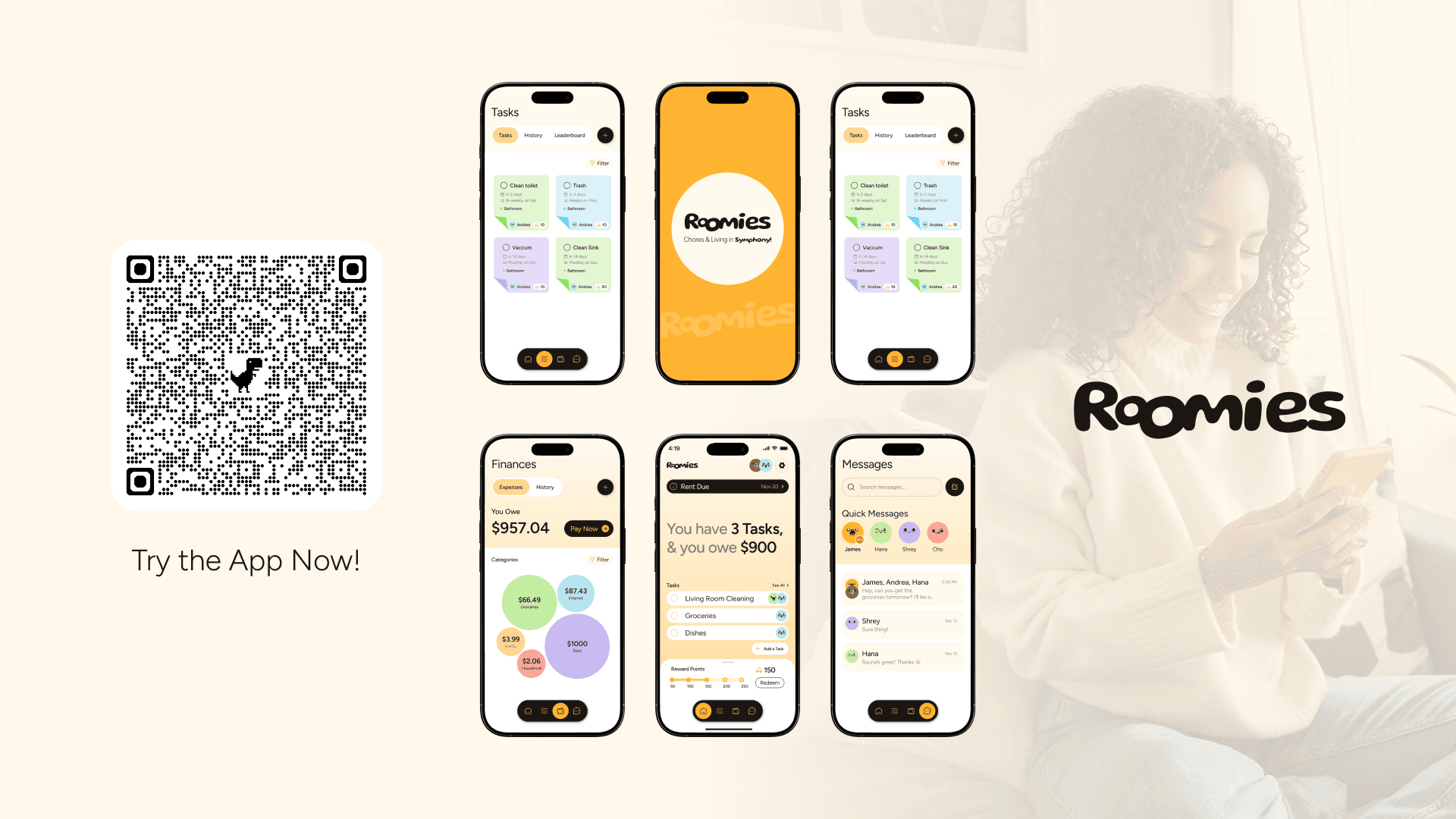
Translating structure into a clear and engaging interface
Key features:
Dashboard overview of tasks and finances
Messaging system for communication
Finance tracking with visual breakdown
Task system with assignment and tracking
Reward system to encourage engagement
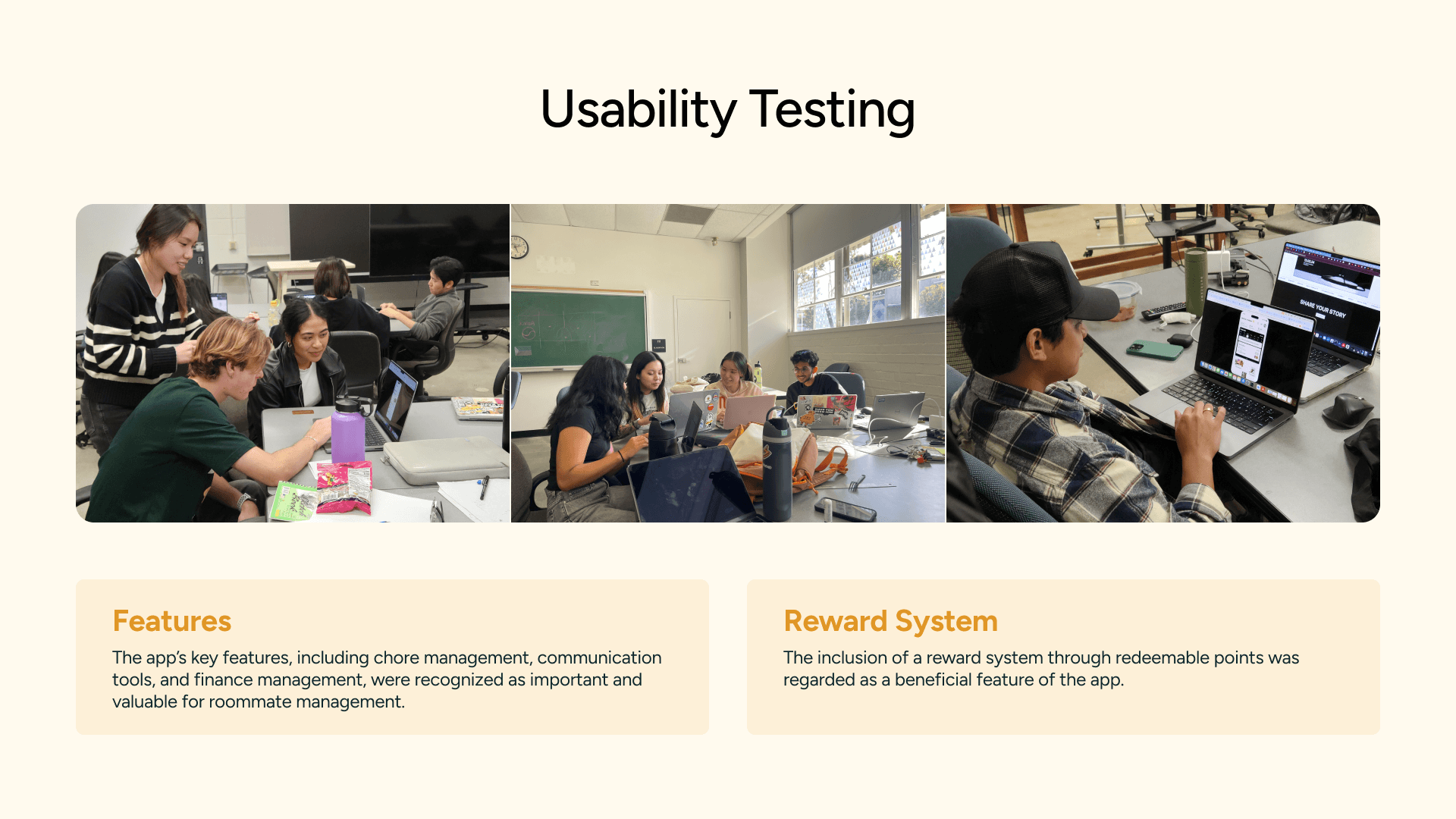
USER TESTING
Users valued structure but wanted simplicity
Testing revealed:
Navigation and flows were generally clear
Users appreciated combining features in one app
Some interactions needed simplification
Clarity of features improved usability
REFLECTION
Designing systems, not just features
This project reinforced the importance of designing for behavior, not just functionality.
I learned that many real-world problems aren’t caused by lack of tools, but by lack of structure. By introducing clarity, visibility, and shared accountability, design can reduce friction in everyday interactions.