Asthma Aware
A personal air quality monitoring system that helps asthmatics understand local environmental conditions in real time
Role
Product Designer
Timeline
3 Months, 2024
Team
Solo
Skills
Product Design
.
Hardware Design
.
Tools
Figma, Arduino, Bolt.new

A thesis project to design beyond the screen.
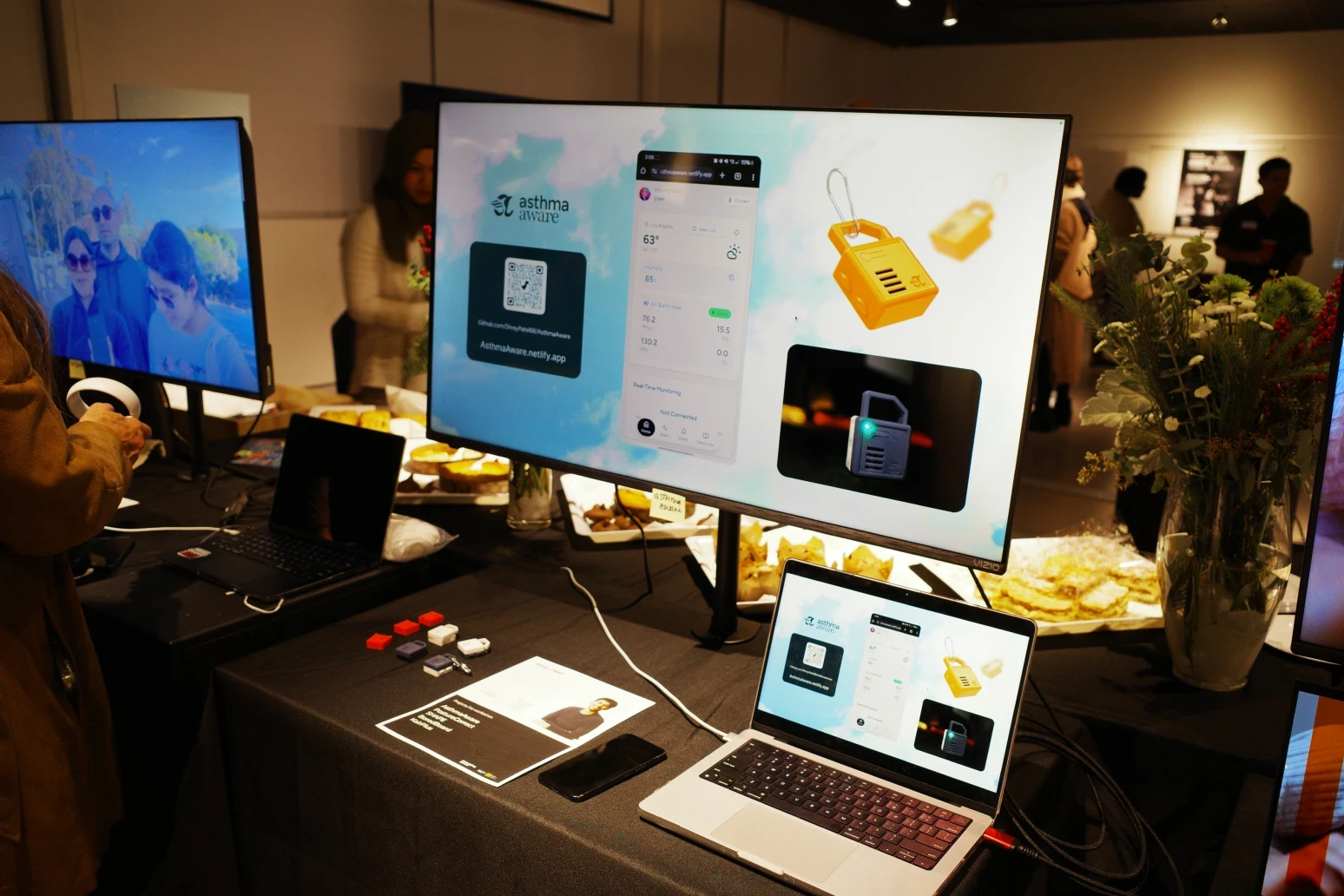
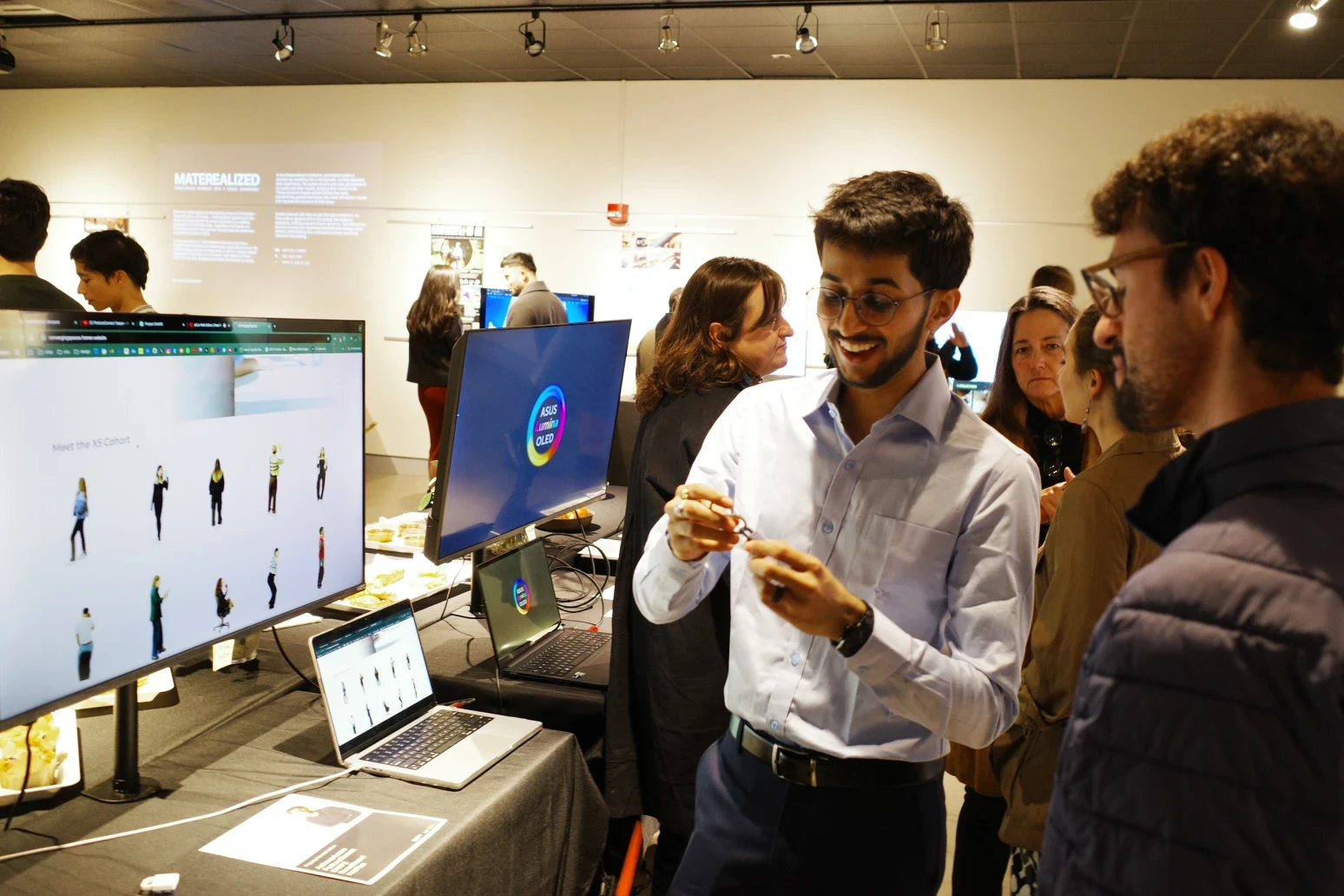
For my Master’s thesis in Human Experience Design Interaction (HXDI), I set out to break out of digital-only thinking. AsthmaAware became an opportunity to design both a physical product and digital experience.
Problem
Regional air-quality data doesn’t reflect real exposure
People with asthma are exposed to triggers like particulates, humidity, and temperature shifts without visibility into when conditions become unsafe.
Current tools rely on regional AQI, failing to capture hyper-local environments—indoors, at street level, or within microclimates—where symptoms actually occur.
Users lack real-time awareness of their immediate environment, making asthma management reactive instead of preventative.

Opportunity
Users want proactive awareness, but lack tools to act on their immediate environment
Users express a strong desire for real-time, proactive alerts, but far fewer actively monitor environmental conditions.
This gap reveals a key opportunity:
Users don’t lack concern—they lack accessible, real-time tools that translate environmental data into actionable insights.

Solution
A portable sensing device and an app that translates data into clarity
AsthmaAware is a portable air-quality sensing device paired with a digital dashboard that visualizes real-time and historical environmental data relevant to asthma triggers.
What it delivers:
Hyper-local monitoring
Real-time + historical trends
Actionable cues
Trend-based interpretation


Design Approach
Prioritizing clarity, trust, and everyday usability
Awareness, not diagnosis: The system provides informational insights without presenting itself as medical advice.
Clarity over data density: Visual hierarchy and signals are prioritized over complex charts.
Context over raw sensor values: Environmental data is translated into understandable trends and summaries.
Designed to fit into real life: The device is lightweight and built to fit naturally into daily routines.
Research
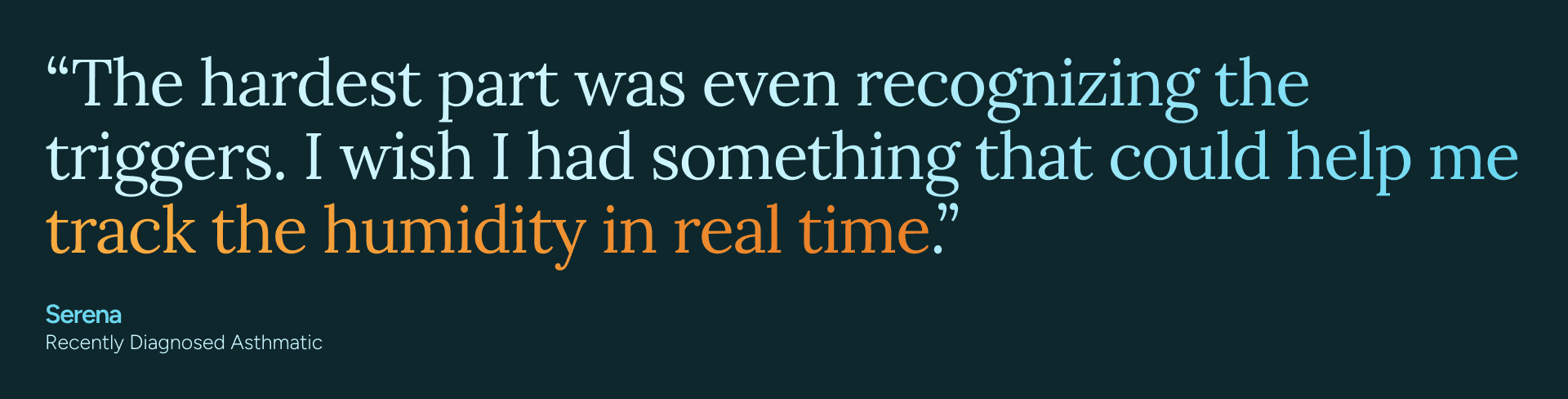
Users want real-time trigger awareness—not just general air quality info
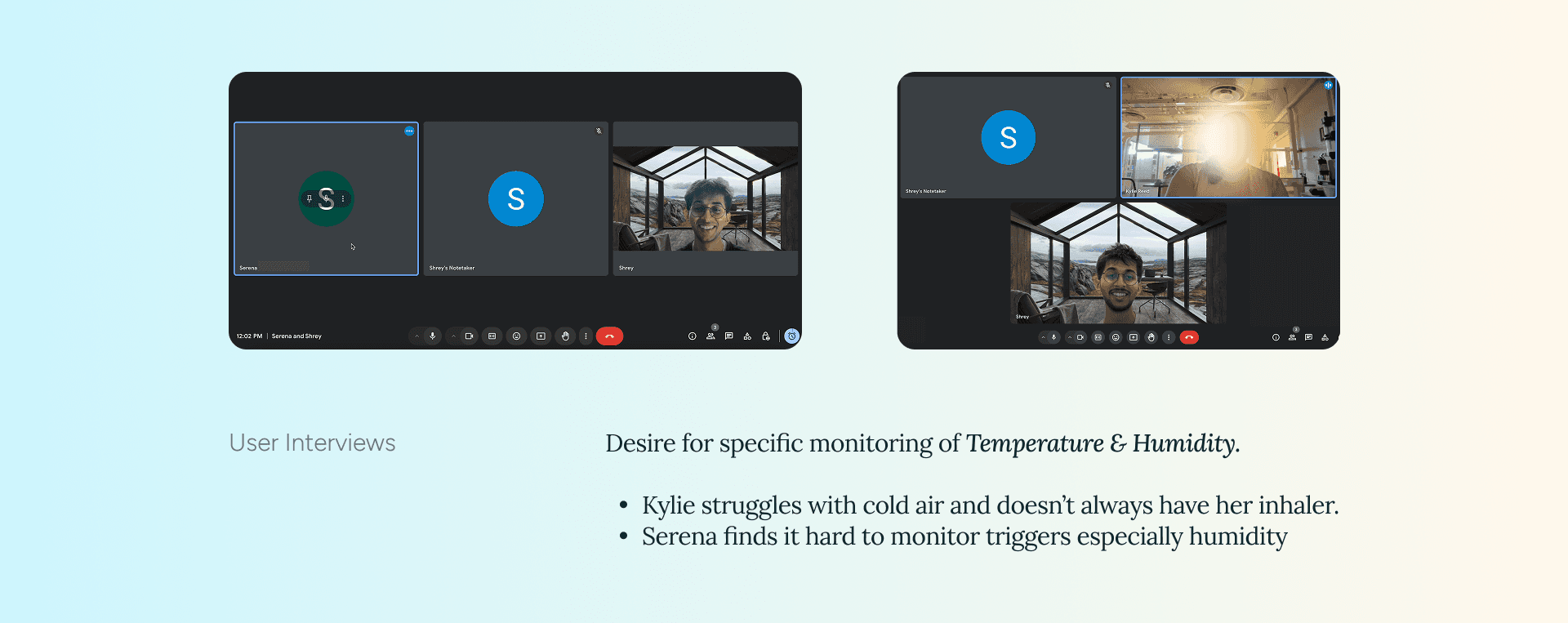
To validate the problem space, I combined survey insights with interviews to understand how people currently manage asthma and where existing tools fall short. What I learned:
Users want real-time awareness when conditions shift
People struggle to connect symptoms with specific triggers
A lot of asthma management is reactive instead of preventative
Process
From concept exploration to a functional prototype
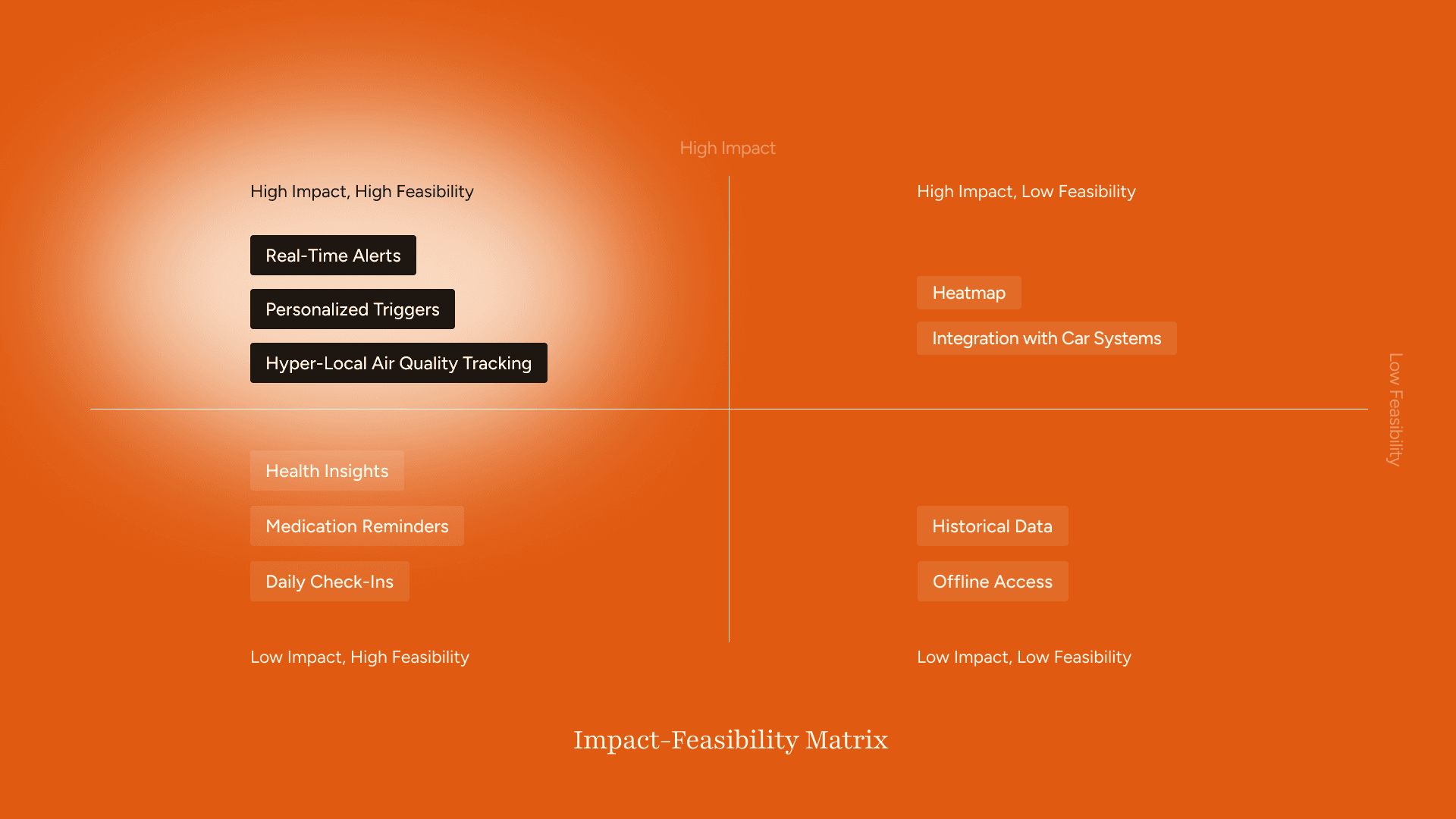
Research & concept development
Identified key asthma triggers and gaps in existing AQI tools.
System and interaction design
Defined device form factor and dashboard information architecture.
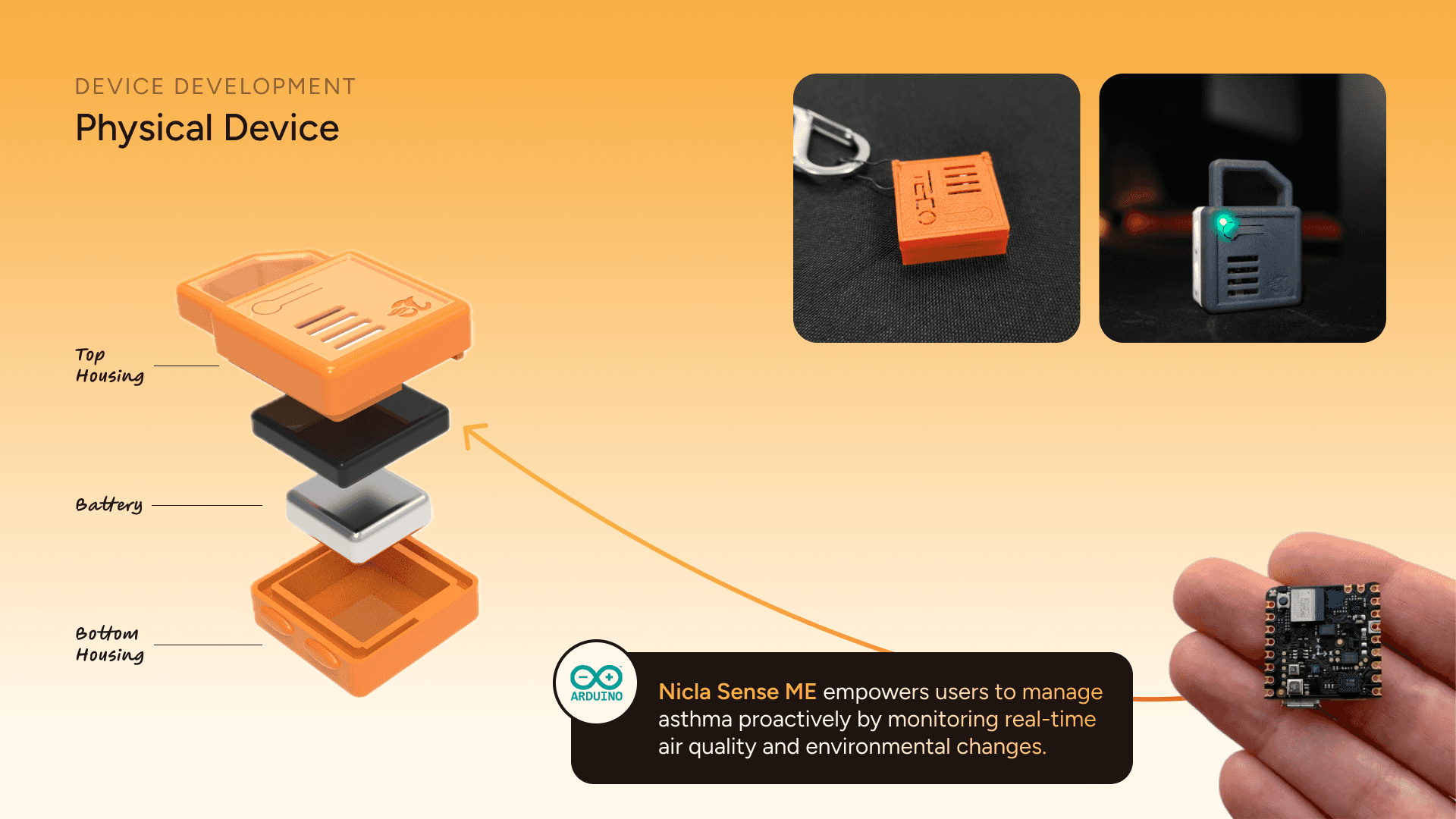
Hardware prototyping
Integrated environmental sensors using Arduino Nicla Sense ME / ENV.
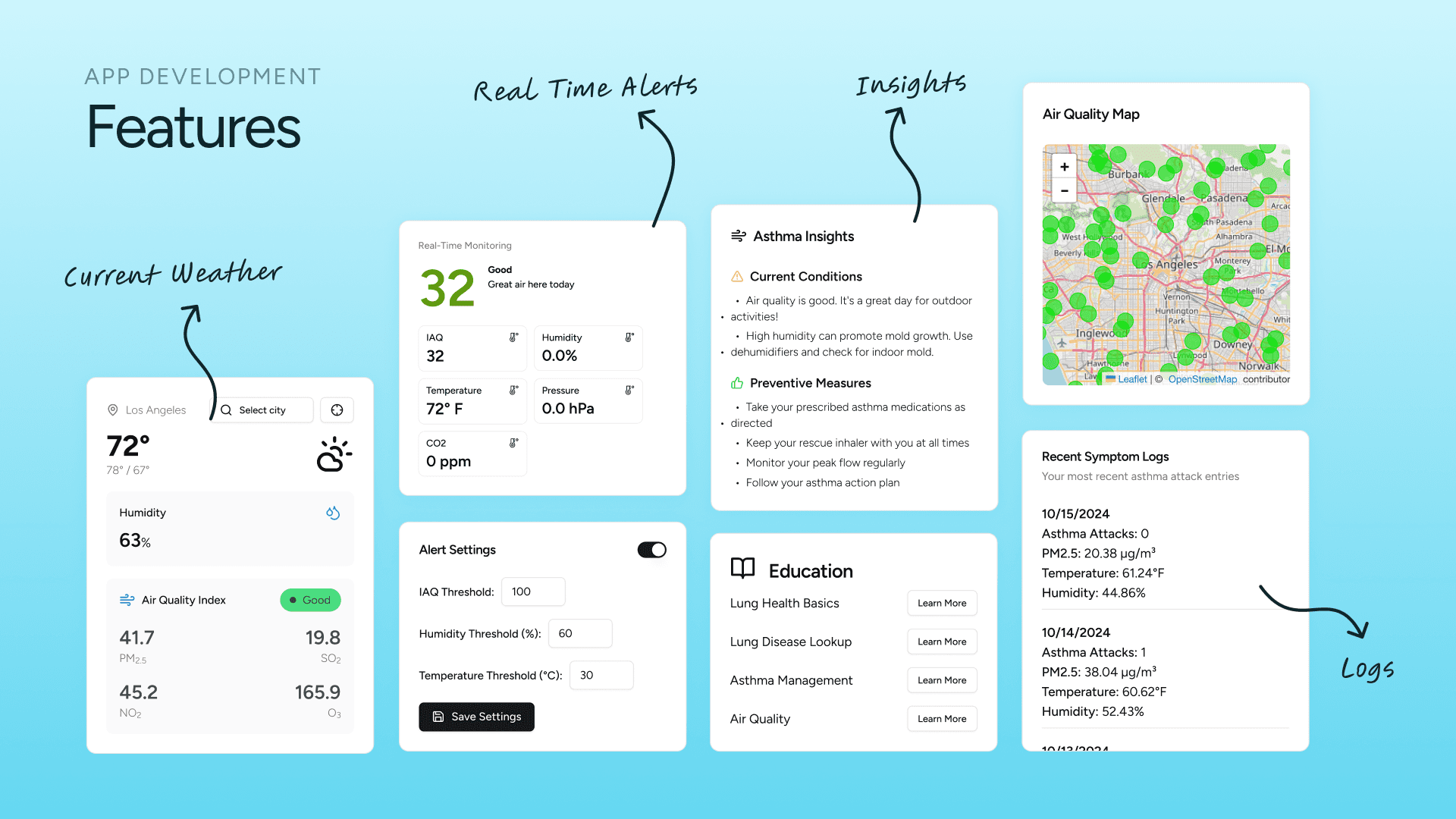
Interface design
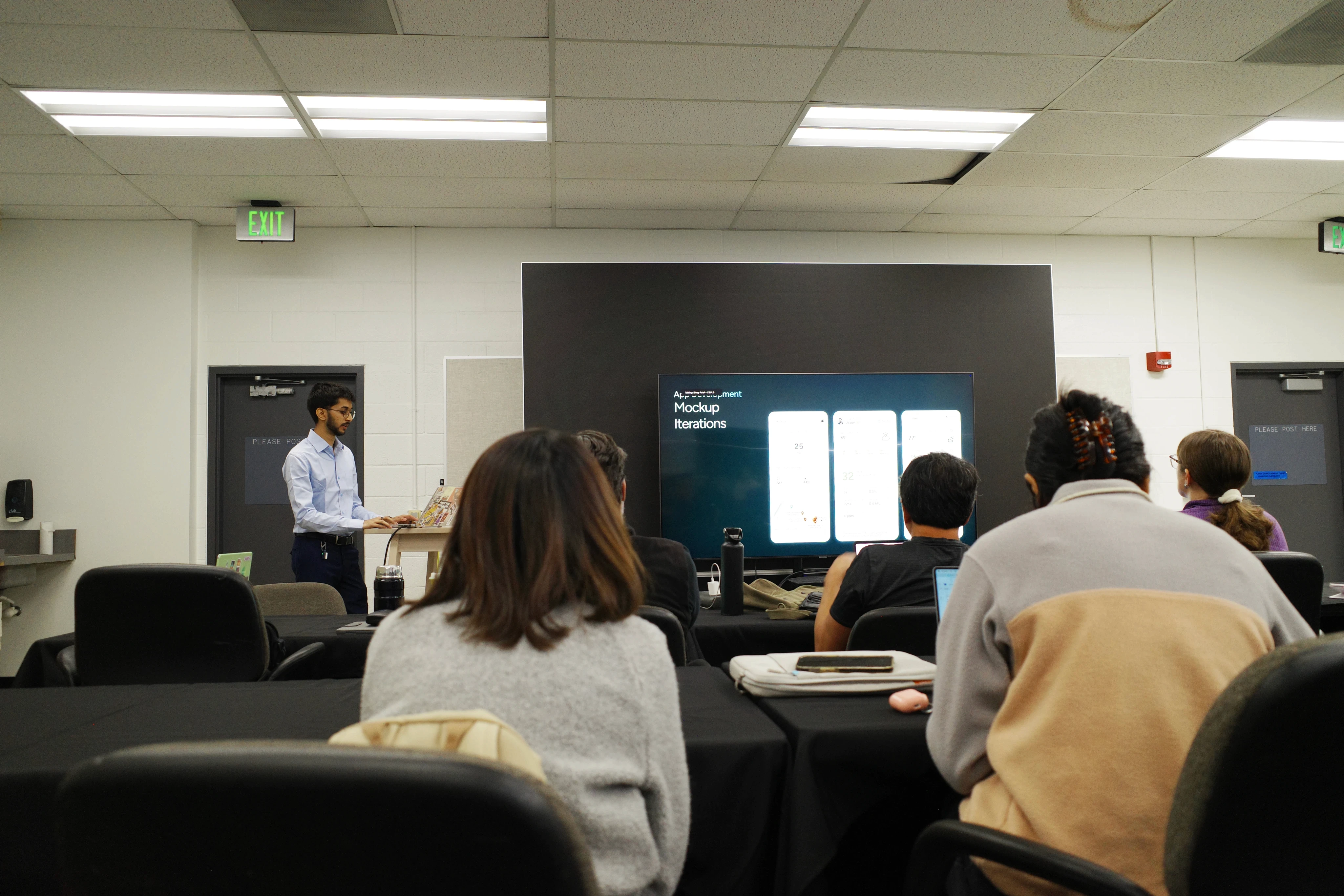
Designed dashboard views for real-time monitoring and historical analysis.
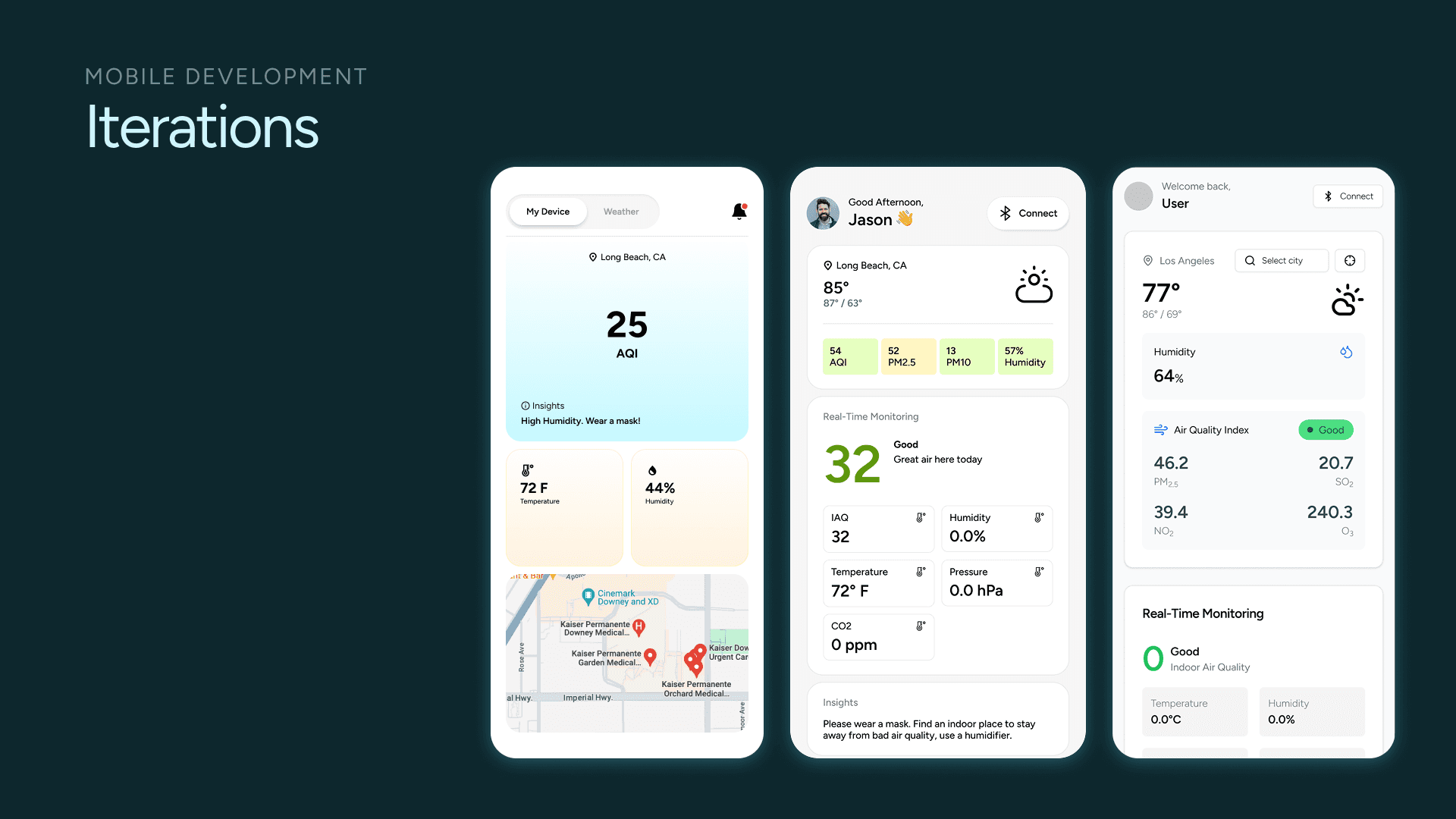
Interaction Model
A continuous loop of sensing, interpretation, and decision-making
Device senses environmental conditions nearby
Data transmits to the dashboard
Dashboard visualizes trends and condition signals
User adjusts behavior based on insights
This transforms environmental awareness into actionable understanding.
User Testing
Real-time insights improved awareness, but users also wanted symptom tracking
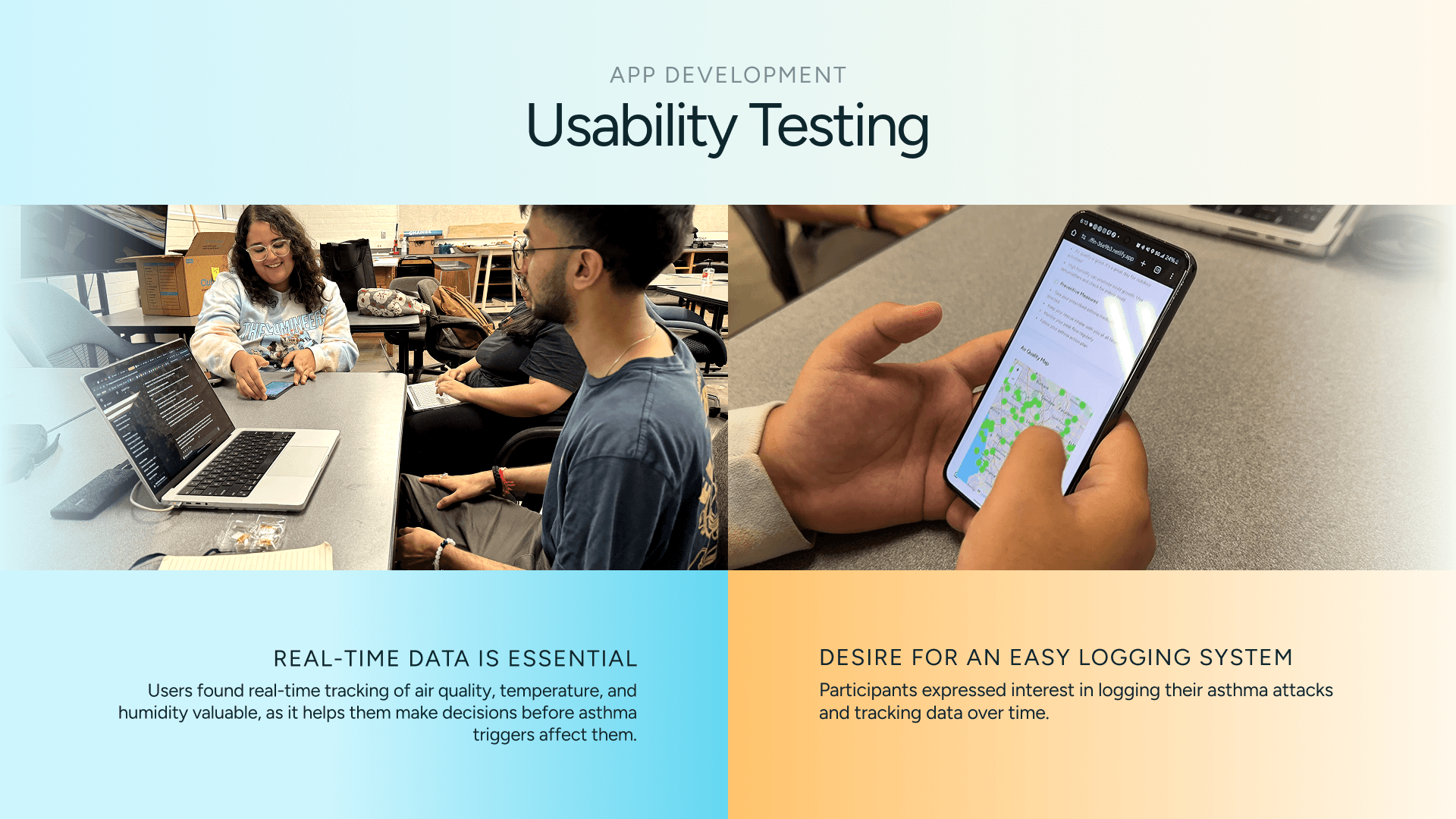
User testing validated that real-time environmental feedback improved awareness and decision-making.
Key insights:
Real-time environmental tracking increased confidence and awareness: Users found live monitoring of air quality, temperature, and humidity valuable because it helped them recognize potentially unsafe conditions before symptoms occurred.
Users wanted to connect environmental data with their personal asthma experiences: Participants expressed interest in logging asthma attacks to track how symptoms correlated with environmental changes over time.
Takeaway:
Users valued immediate environmental awareness, but also wanted tools to help them understand patterns between conditions and their own symptom history.
Iteration
Expanded the system to include asthma attack logging and pattern tracking
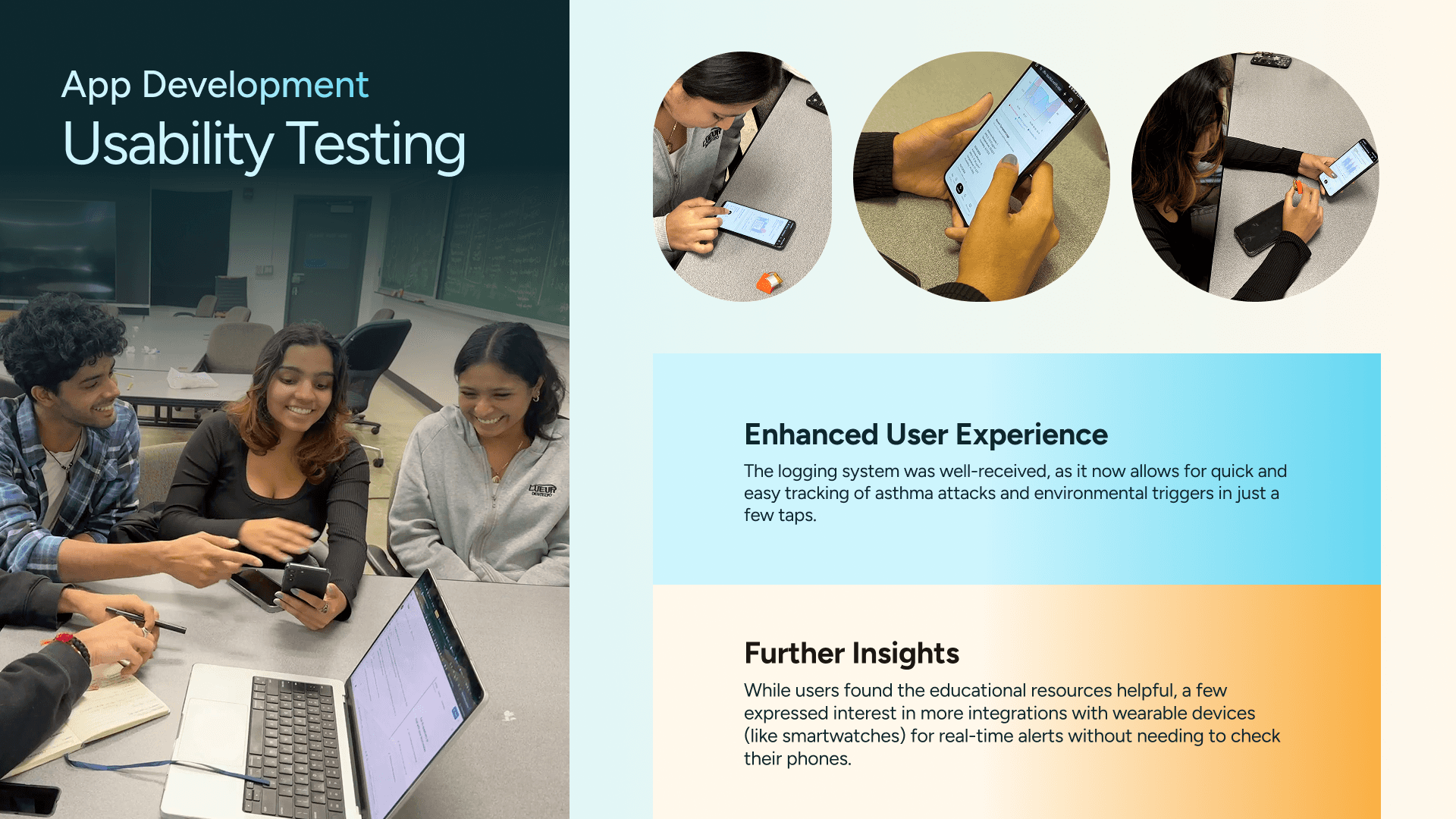
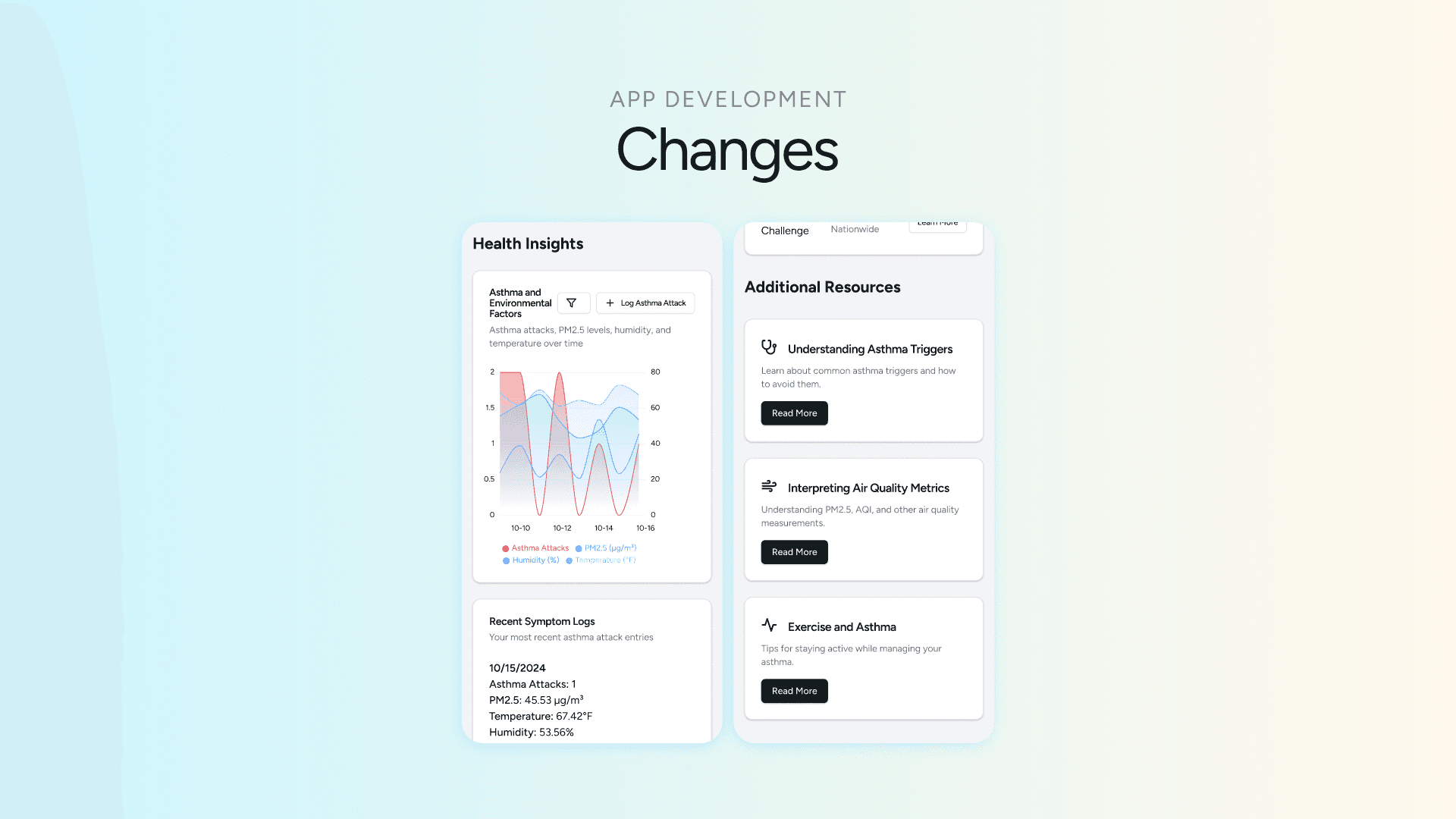
Added a logging feature allowing users to record asthma attacks alongside environmental data
Introduced a health insights view to connect symptom history with environmental conditions
Enabled historical logs and trend analysis to support long-term pattern recognition
The system evolved from real-time monitoring to helping users understand cause-and-effect relationships over time.
Challenges
Integrating hardware and software while maintaining clarity and focus
System cohesion: Ensuring hardware and software functioned as a seamless experience.
Scope management: Balancing technical feasibility with design ambition.
Reflection
Clarity and simplicity over complexity
Initially, I aimed to do too much — thinking more features meant more value. Instead, I learned the importance of simplifying scope and polishing core features.
If I could redo it:
Narrow the vision earlier
Focus on fewer, deeper features
Let user research guide the must-haves, not the nice-to-haves